020 7001 6000
20th January 2012:
With the Olympic Village in east London, one would think this was a perfect opportunity to maximise sustainable green solutions and utilise the existing advanced facilities in close proximity of the Olympic park. But is this happening?
Recycling isn't just about dealing with the problem of waste; it's about dealing with it in a way which is ethical and sustainable. This means that those involved with any aspect of the recycling operation of the Games cannot be complacent and must take responsibility for any direct or indirect action which may impact adversely on the environment.
David Stubbs, head of LOCOG's sustainability team, said "urban areas aren't the easiest places to get big waste infrastructure built and establishing better waste infrastructure in east London was a long-term goal."
But there is pre-existing infrastructure in east London that is being ignored, and would enable the Games to be the greenest and most sustainable Olympics yet! Are we really so ignorant to believe that processing waste in North Lincolnshire, instead of the Olympic zone, is adhering to the sustainable Proximity Principle?
The accusation that a lack of local infrastructure demands that material from the Games be processed up to 150 miles away is unfounded and insulting to the local facilities that have been denied their chance to support the Games.
Coca Cola, a long-term Olympic Games sponsor, in a joint venture with Eco Plastics, will be opening a plastics recycling plant in North Lincolnshire in the Spring of 2012. At this new plant, the PET plastic from the anticipated 20 million used bottles from the Games will be recycled into 80 million new bottles, each containing 25 percent recycled plastic. The plant is being built to accommodate the long-term needs of its UK wide-operations; yet using local facilities would be investing in both the present and the future.
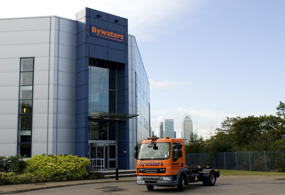
Although there has been a lack of waste infrastructure support by LOCOG and local government, there are nonetheless two excellent independent state-of-the- art plants near to the Olympic Park. Bywaters and Closed Loop both have the required capacity and offer greener and more sustainable solutions than those presently proposed.
It is difficult to comprehend why the Games' most local facility (0.8 miles) will be bypassed for a less technically-efficient plant that is far from being adjacent to the site where the material originates. It is important to understand that the accusations of total lack of local infrastructure are unfounded and that the use of local processors is being avoided so that recurrence is prevented and we can continue to invest in a sustainable future.